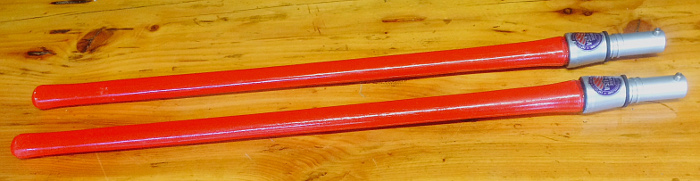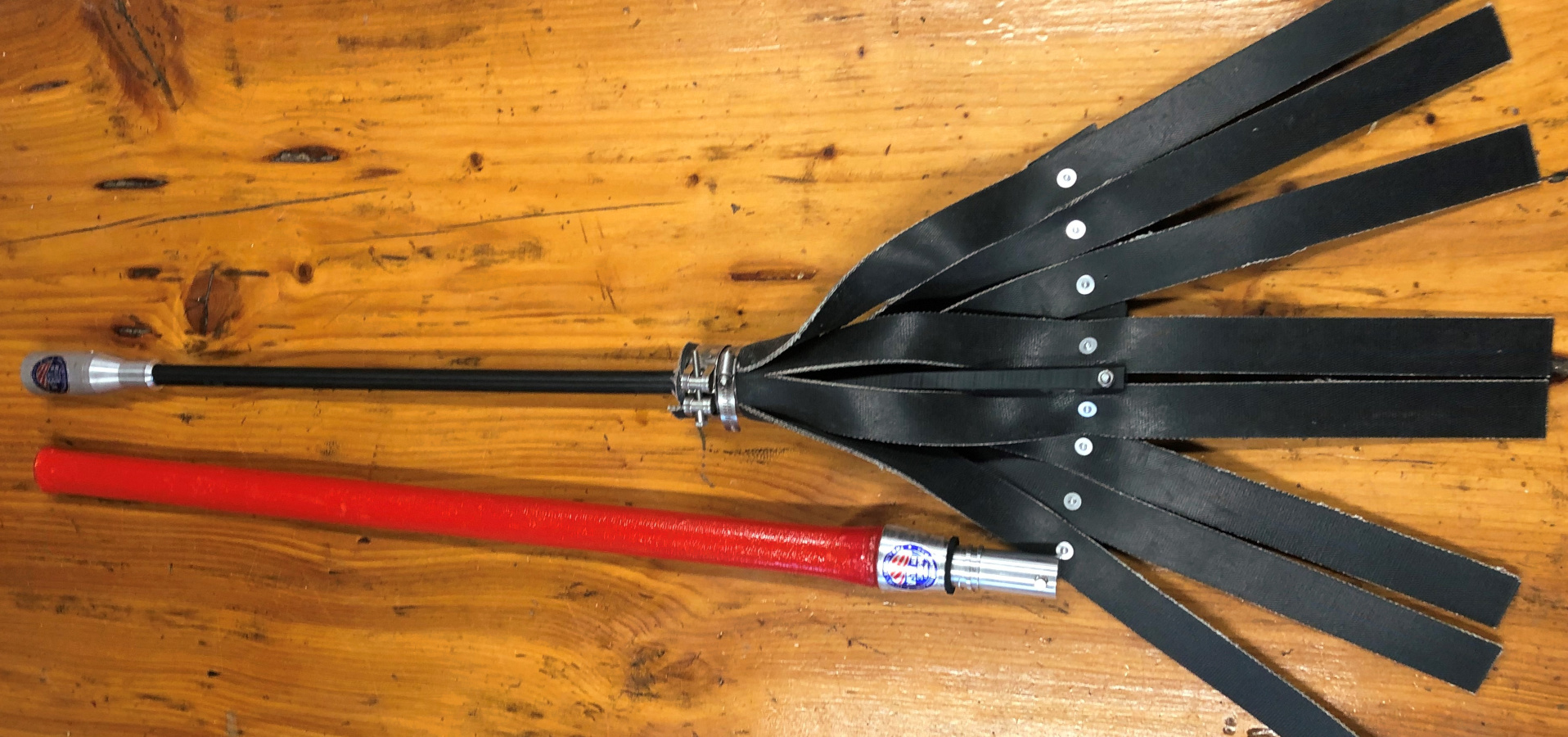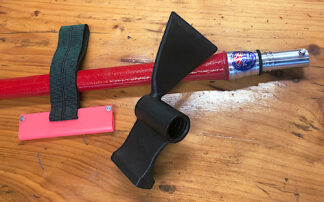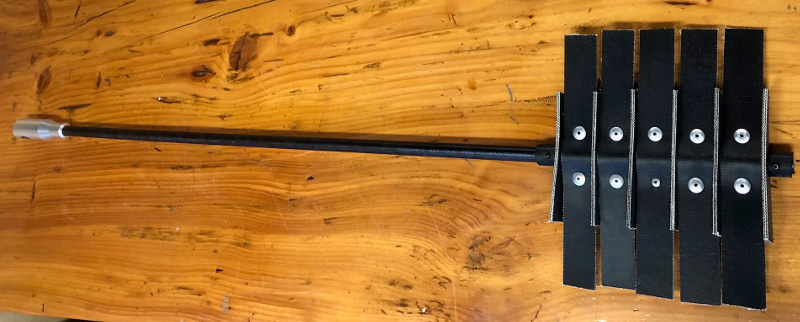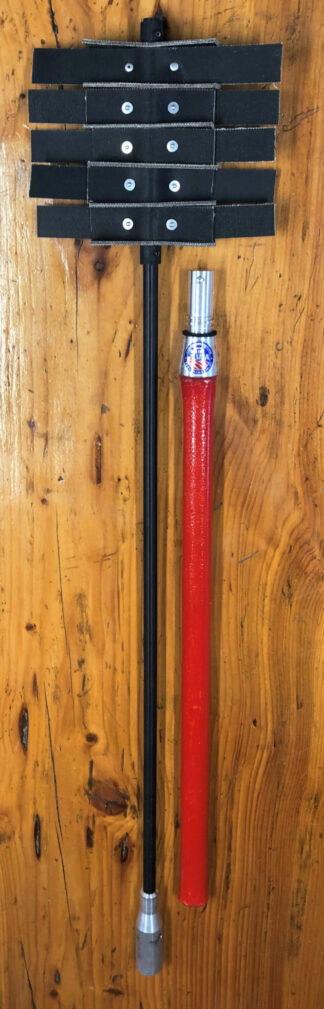
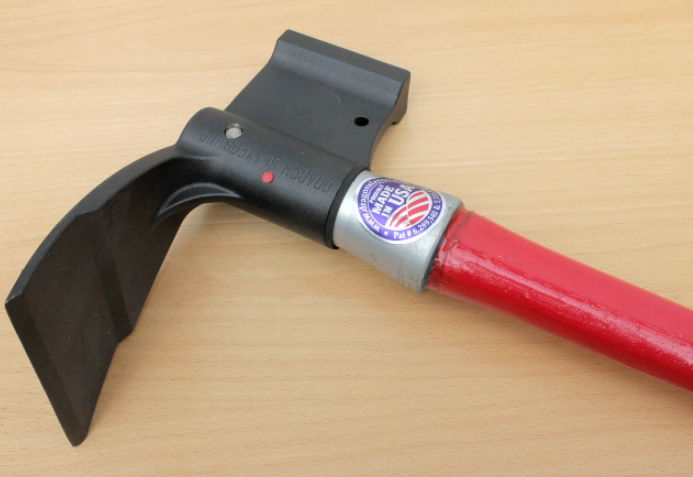
Every Dragonslayers tool starts in the same place: a 37 inch, 2 pound piece of American hickory we call the Universal Handle. It is the heart and soul of everything we build, and it solves a problem that wildfire hand tools have lived with for 100 years. The head can never slip off this handle. Once you understand why, you understand most of what makes our tools different.
| Universal Handle at a Glance Length: 37 inches Weight: 2 pounds Material: American hickory Attachment: Spring-loaded locking pin, snap-lock fit |
The Old Problem Nobody Fixed
For a century, wildfire hand tools shared the same weak point. The head and the handle met at a joint that could loosen, crack, or come apart entirely under hard use. The traditional Pulaski, an icon of Western fire fighting, used a handle only half an inch thick at that joint. Half an inch of wood was carrying the entire shear load of a swinging axe head.
Fire fighters lived with it because there was nothing else. A tool that loosens mid-swing on flat ground is an inconvenience. The same failure on a fire line, at night, on a steep slope, is a different kind of problem entirely.
What Makes the Universal Handle Different
We built the Universal Handle around a large, oval mass of wood at the flared bell housing collar, the exact point where the aluminum CNC fitting meets the hickory. That extra mass is what gives the joint its shear strength, the same strength the old Pulaski handle never had enough of.
Hickory was not a random choice. It is widely considered the best material on earth for striking tool handles, because of how its cell structure absorbs shock. Swing a hickory handle hard enough to break rock, and the wood itself buffers a good share of that impact before it ever reaches your hands and arms. A rubber washer at the collar does the rest.
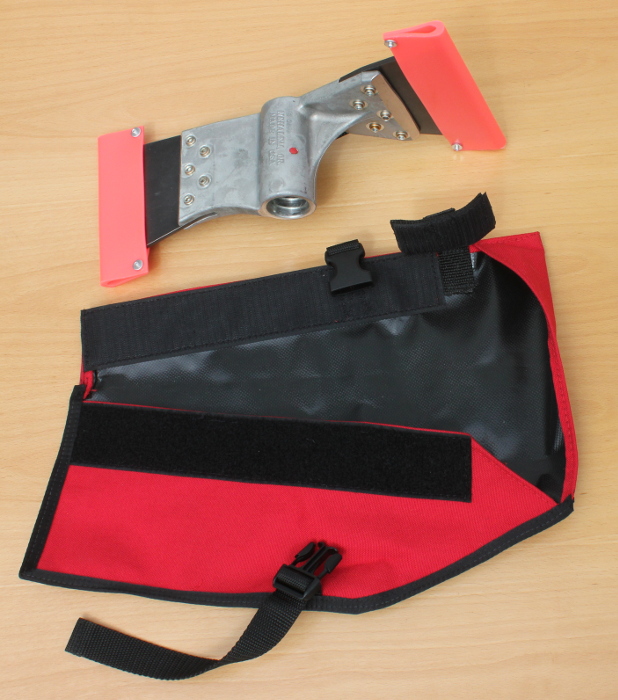
The metal fitting is epoxied onto the wood, then locked permanently in place with a roll pin so the collar can never slide off. From there, large square threads and a spring-loaded locking pin snap-lock any tool head onto the handle. That lock-up is solid enough that the head simply cannot separate from the handle, no matter how hard or how often you swing it.
One Handle, Every Fire Environment on Earth
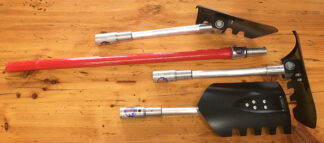
Here is the part that actually changes how a fire fighter works a fire line. The Universal Handle is not built for one tool. It is built to take any tool head we make, on any regional fuel type, anywhere on earth.
| Fire Environment | Tool Head Used | Primary Task |
| Western conifer forest | Magnum Pulaski | Scraping a line down to mineral soil |
| Eastern deciduous forest | Troop Tool | Raking leaf litter and ground cover |
| Tough turf, heavy root, brush | Dragon Swatter | Beating and swatting through what a blade cannot easily cut |
A fire fighter used to need a different tool, with a different handle, for each of those jobs. The Universal Handle collapses that down to one handle and a primary and secondary tool head, weighing about 8 pounds total. That weight stows easily in a fire pack or travel bag, which means a fire fighter can finally bring their own tools on a commercial flight without needing a long, fixed-handle tool that does not mix well with helicopters or tight cargo space.
Why This Matters Beyond Comfort
A fire fighter who is not switching tools mid-task is a fire fighter who keeps moving. On a real fire, conditions change by the hour. Grass gives way to brush. Brush gives way to timber. A crew with one Universal Handle and a couple of interchangeable heads can adapt to that shift in seconds instead of hiking back to a cache for a different tool.
There is also a quieter benefit that shows up in training. Once someone learns the lock and swing mechanics of the Universal Handle, that knowledge carries over to every tool head we make. A new crew member is not relearning a new tool from scratch every time the fuel type changes. They are using the same handle they already know, just with a different head snapped on.
Built to Outlast a Career, Not a Season
We designed the Universal Handle, and every tool head that attaches to it, to be repaired rather than replaced. Blades wear down and get swapped out. We have seen Hot Shot crews run nine blade changes on a single Magnum Pulaski head, with plenty of life left to go another nine or twenty. The handle underneath all of it keeps doing its job long after the blade it started with is gone.
That is the whole point of building a Universal Handle in the first place. A fire fighter should be able to trust the one piece of hickory in their hands for an entire career, swap out whatever wears down on top of it, and never once worry about the head coming loose at the wrong moment.