There is a simple test for any piece of wildfire fighting equipment. Does it hold together at hour twelve of a shift, on a 40-degree slope, after the wind has shifted and the fire is no longer where anyone expected it? That is the actual use case. Not a product demonstration. Not a trade show floor. The real thing, under real conditions, when a crew member is already running on fatigue.
Most firefighting gear suppliers do not build to that standard. They build to a price point, source from wherever the margin works, and assume the fire line will sort itself out. That assumption has a body count behind it.
What Fires Actually Demand from Your Gear
Fires are not getting easier. Climate intensification has lengthened seasons, deepened drought cycles, and pushed fire into fuel conditions that were historically far less combustible. A fire that would have been a contained two-day event a generation ago now runs crews for weeks across terrain that has no margin for equipment that is merely adequate.
Hand tools sit at the end of that chain. Everything from the air tanker overhead to the engine on the road exists, ultimately, to support what a crew member does at ground level with the tool in their hands. When that tool fails at the head-to-handle joint, or cannot be swapped fast enough when fuel conditions change mid-task, the whole system behind it loses effectiveness.
We built Dragonslayers equipment around that operational reality rather than around what is easiest to manufacture or cheapest to source.
Three Things Standard Gear Gets Wrong
1. Single-function design. A tool that only digs forces a crew member to stop, walk back, and swap implements every time conditions change. On a fast-moving fire line, that is time nobody has. 2. Weak head attachment. Most conventional handles rely on a wedge or friction fit at the head joint. Under repeated heavy impact, that connection loosens. A head separating from a handle mid-swing is not a warranty issue. It is a safety event. 3. Replacement over repair. When a blade wears down, most tools on the market go in the trash. That model costs departments significantly more over a five-year equipment program than a tool with replaceable components and a handle built to outlast multiple blades.
How We Addressed Each One
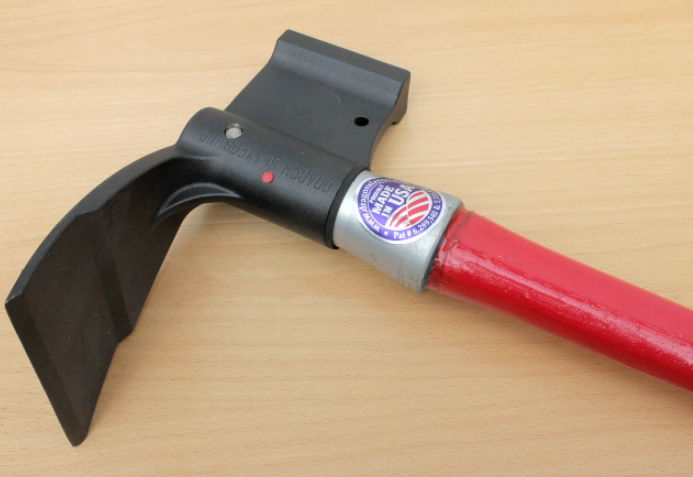
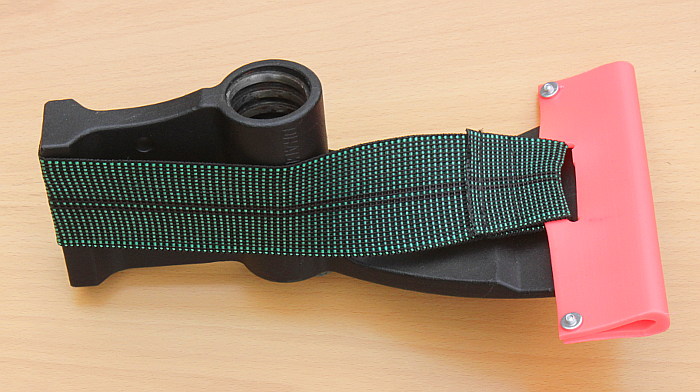
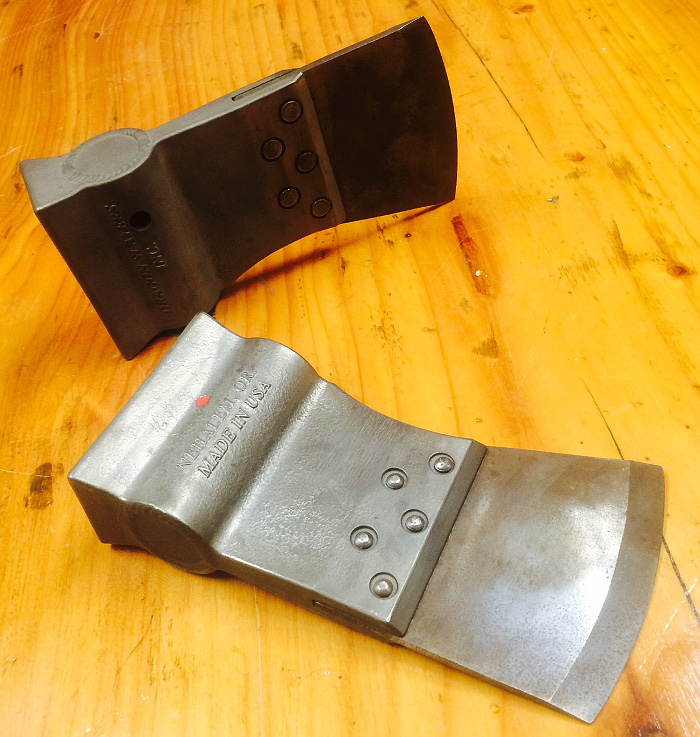
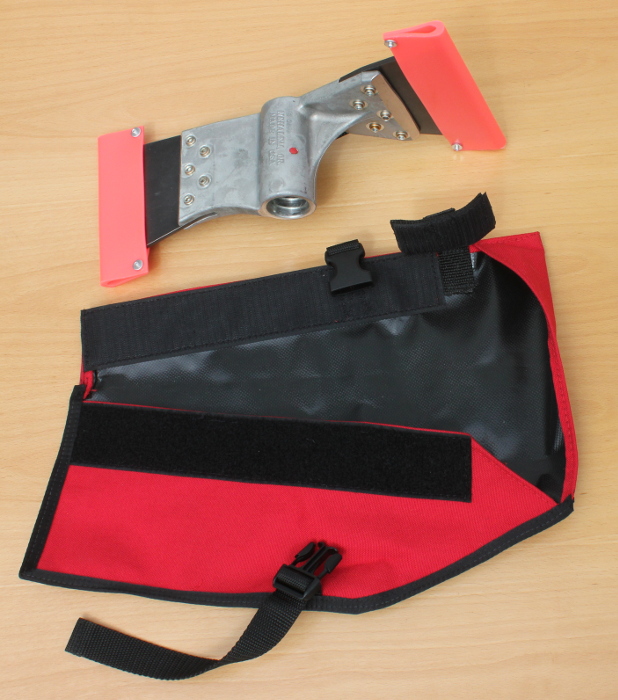
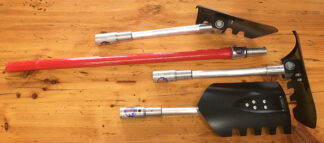
Our Troop Tool carries three interchangeable blade sets, including a McLeod-style scraper, a high-back fire rake blade, and an angled shovel configuration. One tool head, three distinct functions, swapped in the field in seconds. The same fire fighter scrapes line, rakes duff, and throws dirt without putting anything down.
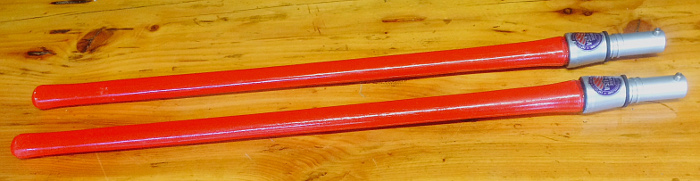
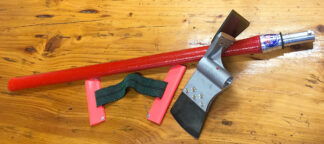
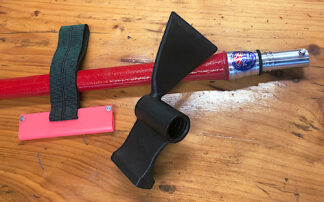
The Universal Handle, 37 inches of American hickory with a spring-loaded locking pin, eliminates the head separation problem entirely. The pin snap-locks every tool head we make. Under any field load, at any angle, the head stays exactly where it belongs.
On blade replacement: Hot Shot crews have run nine full blade changes on a single Magnum Pulaski head. The hickory handle underneath those nine blades has never needed replacement. That is the real cost model, and it is a very different number than the sticker price on a cheaper tool suggests.
What to Ask Before You Buy
Whether you are outfitting a crew for the first time or re-evaluating a department’s procurement cycle, these four questions separate serious wildfire fighting equipment from the catalog filler most suppliers lead with.
Question
What the Answer Reveals
Was it designed for wildfire specifically, or adapted from general use?
Purpose-built tools reflect how fire actually behaves; adapted tools cut corners on the parts that matter most
Can it be repaired when components wear, or does it require full replacement?
Repairability determines true five-year program cost, not the unit price on the purchase order
What happens to the head attachment under repeated hard impact?
Friction fits and basic wedges loosen; a spring-loaded locking pin does not
Who tested it, and under what conditions?
Lab testing and fire line testing produce very different tools; one gets used when the stakes are real
For Rookies, Veterans, and the People Who Sign the Purchase Orders
If you are new to this work, the gear you start with shapes the habits you build. Start with equipment designed for the job.
If you have twenty years on the line, you already know exactly what a poorly designed tool costs you at the end of a hard shift. You have felt it in your shoulders and your hands. We built Dragonslayers tools because we felt it too.
And if you are the one signing the purchase order: the firefighting gear suppliers offering the lowest unit price are not running the full cost calculation. We are. That math is worth a conversation before the next procurement cycle closes.
Frequently Asked Questions
Yes, and the results are documented. In a live training exercise with 40 Spanish fire fighters, the first test structure burned to the ground in minutes under 20 mph wind and dry straw fuel with no control lines in place. After one hour of instruction using the right tools and technique, all 40 structures survived identical conditions. No exceptions.
The Universal Wildfire Mitigation Blueprint was tested across four National Wildlife Refuges in Alaska, covering territory as large as the state of New Jersey. BLM and USFS Smokejumpers parachuted in to establish control lines around 17 different U.S. Government structures, alongside local Athabaskan villagers. These were real structures under active fire threat, not simulated environments.
The Universal Handle is built to last an entire career. Replaceable blades mean worn components are swapped independently rather than scrapping the whole tool. Hot Shot crews have logged nine complete blade changes on a single Magnum Pulaski head, with the hickory handle still performing throughout. That durability changes the real cost calculation significantly.
Dragonslayers was awarded USDA Small Business Innovation Research grants to develop better wildfire hand tools for all five federal wildfire agencies. Tools from that program are now in active use by the Entiat IHC in Washington and the Prineville IHC in Oregon. Federal research funding and ongoing IHC adoption are independent of any claim we make ourselves.
Yes. Because every Dragonslayers tool head shares the same Universal Handle mechanics, a crew member trained on one tool already understands every other tool in the lineup. In the Spanish training exercise, participants with zero prior fire fighting experience were applying the technique confidently after a single afternoon of instruction.
In 1947, a Smokejumper named Wagner Dodge did something nobody had trained him to do. He lit a fire in front of himself, climbed into the ashes, and lived. Thirteen of his crew, running from the same flames, did not. That single decision became the seed of what we now call Escape Fire Control, and it still shapes how Dragonslayers thinks about wildfire survival today.
This is not a history lesson for its own sake. The Mann Gulch fire and the man who survived it hold a lesson that almost nobody outside of fire science ever hears about, and that lesson is more relevant now than it was in 1947.
Death in the Short Grasses
Sixteen jumpers parachuted into a quiet fire outside Helena, Montana. The fire sat low in a timbered draw, the kind of fire a crew handles without much drama. They checked their gear, picked up tools, food, and water, and started down toward the smoke.
Then the wind turned. A gust came out of nowhere and pushed the fire out of the timber and straight up the open, grass-covered slope the crew was standing on. Slope and wind together meant the fire was no longer behind them. It was coming for them.
Dodge tried to call the crew back to him. Between the wind, the roar of the flames, and tools clanking against gear, most never heard him. He struck a match and lit the grass in front of his own feet, then walked into the ashes and lay down with his feet toward the fire. The patch he created was roughly 75 feet by 100 feet of burned ground; what fire crews now call the black.
He was buffeted by heat and wind but never burned. Two other jumpers scrambled over rimrock to a rockslide and survived on bare stone. Thirteen others did not make it. When asked later if he had ever trained for what he did, Dodge gave a simple answer. It just seemed like the logical thing to do.
Why Nobody Taught This for Decades
An escape fire has no leash on it. Once you light it, you cannot fully control where it spreads or how fast. For exactly that reason, fire agencies have been reluctant to teach it as a standard technique. It works when there is no better option left, but it carries real risk of its own.
That reluctance left a gap. Dodge proved an escape fire could save a life when every other option was gone, but nobody built a system around making that choice safer, more predictable, or available before the moment of crisis. Escape Fire Control is our answer to that gap.
Sun Tzu Saw This Coming, 2,000 Years Early
Long before wildfire science existed, a military strategist named Sun Tzu wrote a chapter in The Art of War called Attack by Fire. Military academies still teach it. Most readers skim past the final lines, the ones warning that knowing how to attack with fire means nothing if you do not also know how to defend against being attacked by it.
Sun Tzu never wrote the defense himself. We built it. Take his idea of a 360-degree defensive position, the kind used to shape a battlefield against attack from any direction, and combine it with what Dodge proved in the short grasses of Mann Gulch. The result is a way to create controlled black space around a home, a crew, or a town, before the fire storm ever arrives, instead of improvising one in a moment of panic.
Shaping the Battle Space Before the Fire Arrives
Here is the difference between what Dodge did and what Escape Fire Control does. Dodge had seconds. He lit one fire, once, with no plan and no second chance. Escape Fire Control gives you the plan ahead of time, built and practiced long before a fire storm shows up on the ridge.
Three concentric control lines circle whatever you want to protect: a home, a cluster of homes, a town. The space between those lines gets thinned, pruned, and cleared of light fuel ahead of fire season. When conditions turn dangerous, a trained operator lights a controlled strip of fire just inside the outer lines, using the wind instead of fighting it.
The flame runs a short distance, hits the control line, and goes out. No fuel left to burn means no fire left to spread. Repeat that around the full circle and you get exactly what Dodge created by accident: a ring of black, except this one is planned, practiced, and does not depend on a single man’s instinct under pressure.
The Two Instincts Every Fire Fighter Already Knows
Long before Escape Fire Control had a name, wildland fire crews lived by two basic instincts. Both point toward the same idea Dodge acted on at Mann Gulch.
1. Black-line is the only complete fireline. Burned ground has no fuel left to carry flame, so a fire cannot cross it. This is the entire logic behind a control line. 2. Get into the black. If a fire hooks around unexpectedly, or a spot fire ignites somewhere nobody saw coming, the only real option left is to reach ground that has already burned.
Dodge did not invent these instincts. He simply ran out of time to dig a line the normal way, so he created his own black space on the spot, then got into it. Escape Fire Control takes that same instinct and gives it structure, training, and enough lead time that nobody has to improvise it under fire.
What This Looks Like in the Field
We tested this method across four National Wildlife Refuges in Alaska, working with Smokejumpers and local Athabaskan crews from villages inside the Koyukuk, Innoko, Selawik, Nowitna, and Kanuti refuges. Crews referred to the test sites as the Black Donut projects, since the finished pattern of control lines, burned ground, and protected center looks exactly like its name.
Later, the same method was tested with Spanish fire fighters in a live outdoor training exercise. Forty students, each with their own small training house, faced 20 mile-per-hour winds and dry straw fuel. The first house, lit without any control lines in place, burned to the ground in minutes with flame lengths reaching six feet.
After an hour of classroom instruction on the method, the same forty students went back outside, faced identical wind and fuel conditions, and applied the technique themselves. None of the forty houses burned. People with zero fire fighting background learned to control flame length and protect a structure in a single afternoon.
Test Round
Control Lines Used
Outcome
Before training
None
House destroyed; flame lengths reached 6 feet
After training
Three concentric control lines
All 40 houses survived; flame length fully controlled
The Strategic Takeaway
Wagner Dodge proved, by accident and under extreme pressure, that a controlled escape fire could outwit a fire storm too strong and fast to fight head-on. What he lacked was time, training, and a plan. Most people facing a wildfire today are in the exact same position he was: out of options, with seconds to decide.
Escape Fire Control closes that gap before the emergency starts. It takes Dodge’s instinct, Sun Tzu’s defensive logic, and decades of field testing, and turns them into something a trained home owner or fire crew can set up and practice long before the wind shifts and the fire turns toward them. The goal has never changed since Mann Gulch in 1947: get into the black, survive, and let the fire pass with nothing left to burn.
Every Dragonslayers tool starts in the same place: a 37 inch, 2 pound piece of American hickory we call the Universal Handle. It is the heart and soul of everything we build, and it solves a problem that wildfire hand tools have lived with for 100 years. The head can never slip off this handle. Once you understand why, you understand most of what makes our tools different.
Universal Handle at a Glance Length: 37 inches Weight: 2 pounds Material: American hickory Attachment: Spring-loaded locking pin, snap-lock fit
The Old Problem Nobody Fixed
For a century, wildfire hand tools shared the same weak point. The head and the handle met at a joint that could loosen, crack, or come apart entirely under hard use. The traditional Pulaski, an icon of Western fire fighting, used a handle only half an inch thick at that joint. Half an inch of wood was carrying the entire shear load of a swinging axe head.
Fire fighters lived with it because there was nothing else. A tool that loosens mid-swing on flat ground is an inconvenience. The same failure on a fire line, at night, on a steep slope, is a different kind of problem entirely.
What Makes the Universal Handle Different
We built the Universal Handle around a large, oval mass of wood at the flared bell housing collar, the exact point where the aluminum CNC fitting meets the hickory. That extra mass is what gives the joint its shear strength, the same strength the old Pulaski handle never had enough of.
Hickory was not a random choice. It is widely considered the best material on earth for striking tool handles, because of how its cell structure absorbs shock. Swing a hickory handle hard enough to break rock, and the wood itself buffers a good share of that impact before it ever reaches your hands and arms. A rubber washer at the collar does the rest.
The metal fitting is epoxied onto the wood, then locked permanently in place with a roll pin so the collar can never slide off. From there, large square threads and a spring-loaded locking pin snap-lock any tool head onto the handle. That lock-up is solid enough that the head simply cannot separate from the handle, no matter how hard or how often you swing it.
One Handle, Every Fire Environment on Earth
Here is the part that actually changes how a fire fighter works a fire line. The Universal Handle is not built for one tool. It is built to take any tool head we make, on any regional fuel type, anywhere on earth.
Fire Environment
Tool Head Used
Primary Task
Western conifer forest
Magnum Pulaski
Scraping a line down to mineral soil
Eastern deciduous forest
Troop Tool
Raking leaf litter and ground cover
Tough turf, heavy root, brush
Dragon Swatter
Beating and swatting through what a blade cannot easily cut
A fire fighter used to need a different tool, with a different handle, for each of those jobs. The Universal Handle collapses that down to one handle and a primary and secondary tool head, weighing about 8 pounds total. That weight stows easily in a fire pack or travel bag, which means a fire fighter can finally bring their own tools on a commercial flight without needing a long, fixed-handle tool that does not mix well with helicopters or tight cargo space.
Why This Matters Beyond Comfort
A fire fighter who is not switching tools mid-task is a fire fighter who keeps moving. On a real fire, conditions change by the hour. Grass gives way to brush. Brush gives way to timber. A crew with one Universal Handle and a couple of interchangeable heads can adapt to that shift in seconds instead of hiking back to a cache for a different tool.
There is also a quieter benefit that shows up in training. Once someone learns the lock and swing mechanics of the Universal Handle, that knowledge carries over to every tool head we make. A new crew member is not relearning a new tool from scratch every time the fuel type changes. They are using the same handle they already know, just with a different head snapped on.
Built to Outlast a Career, Not a Season
We designed the Universal Handle, and every tool head that attaches to it, to be repaired rather than replaced. Blades wear down and get swapped out. We have seen Hot Shot crews run nine blade changes on a single Magnum Pulaski head, with plenty of life left to go another nine or twenty. The handle underneath all of it keeps doing its job long after the blade it started with is gone.
That is the whole point of building a Universal Handle in the first place. A fire fighter should be able to trust the one piece of hickory in their hands for an entire career, swap out whatever wears down on top of it, and never once worry about the head coming loose at the wrong moment.
By Thomas “Troop” Emonds, Founder · Nehalem, Oregon · 23 Years U.S. Forest Service & BLM Smokejumper
Choosing among firefighting gear suppliers is not a procurement exercise. It is an operational decision with consequences that play out on the fire line, not in a conference room. The gear a crew carries determines how quickly they can build line, how safely they can retreat, and how much they can realistically accomplish across a 14-hour shift. At Dragonslayers, we have spent more than two decades building hand tools designed around one principle: the firefighter should never have to stop and think about their equipment. The tool should disappear into the work. What follows is a direct account of how we think about wildfire tool design, what distinguishes professional-grade gear from standard-issue equipment, and what procurement officers, crew leaders, and homeowners in the wildland-urban interface should understand before they buy.
Why Most Conventional Wildfire Tools Were Already Outdated
Here is the uncomfortable reality about the hand tools most fire agencies were still issuing through much of the twentieth century: many of their core designs had not changed meaningfully since the 1910s. The Pulaski, an essential wildfire tool, entered widespread use after the 1910 Big Blowup. Its basic geometry was still essentially the same seventy years later.
That is not tradition. That is inertia.
The problems were not subtle. Single-function tools forced crews to carry more weight. Handles failed under field conditions. Blade-to-handle connections on traditional Pulaskis allowed the head to loosen or come free entirely — a safety hazard that becomes acute in high-stress situations. The tools were also sized and weighted for a generalized figure rather than designed around ergonomic science, meaning crew fatigue accumulated faster than it needed to.
When I left the Forest Service after 23 years, these frustrations were the foundation of what became Dragonslayers. The goal was never to produce a slightly better version of what already existed. It was to rethink wildfire hand tools from the mechanism outward.
FIELD INSIGHTThe shift in wildfire intensity across the American West is not theoretical. Fires are burning hotter, moving faster, and occurring in fuel types that were historically wetter or less combustible. Tools designed for 1970s fire conditions are increasingly mismatched to the work crews are being asked to do.
What Separates a Premium Tool from Standard-Issue Gear
Most of the differences that matter are invisible at the point of purchase. They show up at hour ten on a fire line, or when a handle takes a compressive load it was not designed for, or when a crew needs to switch tasks quickly and discovers that none of their single-function tools are right for what is in front of them.
There are four criteria we evaluate every tool against:
Criterion
What to Look For
What Standard Gear Misses
Handle Integrity
Three times tensile strength of traditional materials; pin-lock or snap-lock mechanism
Hardwood splits under load; heads can loosen or detach
Tool Versatility
Multi-function heads; interchangeable handle systems
Single-function tools require carrying 3–4 implements for the same work
Transport Design
Breakdown capability; compact stow for smokejumper aircraft or vehicle deployment
Fixed-handle tools that do not pack efficiently
Longevity
Replaceable blades and handles; formal warranty; multi-year program durability
1–2 season lifespan before replacement; no refurbishment pathway
The Universal Handle system we developed as part of our Phase II USDA grant work addresses the transport and versatility problems simultaneously. A single handle with a snap-lock mechanism accepts multiple tool heads. A crew can reconfigure for digging, raking, or smothering without switching implements entirely. On a fire line where conditions change by the hour, that is not a convenience. It is a tactical capability.
“A tool should disappear into the work. The firefighter’s attention belongs on the fire, not on the equipment in their hands.”
Matching the Right Tool to the Right Fire Environment
One of the clearest gaps in how most buyers approach wildfire tool procurement is the assumption that a single tool set works across all fire environments. It does not. Grassland fires, temperate forest fires, and Arctic Taiga fires require different tool geometries, different blade profiles, and different approach strategies.
Magnum Pulaski Temperate forest and mixed fuel. Double-width grub-hoe blade, replaceable components, handle 3 inches longer than traditional for improved leverage and safety balance.
Troop Tool Multi-function forest tool. Operates as angled shovel, McLeod scraper, fire rake, and mop-up tool. Designed for upright working posture to reduce fatigue and improve visibility.
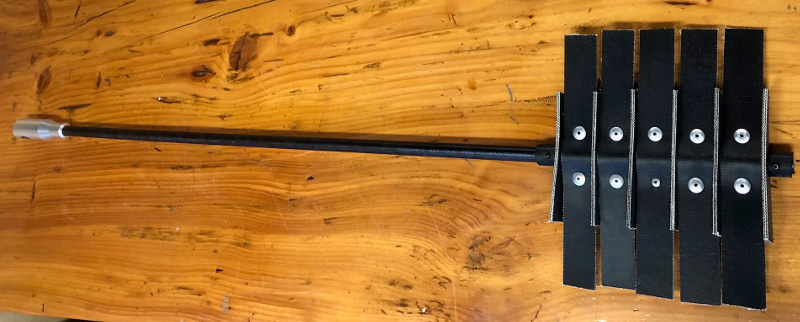
Dragon Swatter Grassland, oak-grass, and Ponderosa pine/grass ecosystems. Highly effective for both suppression and prescribed burning; the preferred tool for controlled burn programs.
Tony Pad Swatter Arctic Taiga ecosystems. Designed specifically for the fuel structure, terrain, and fire behavior patterns of northern boreal environments.
Bonnie Slam Hammer Combination tool with steel wedge head and Magnum Pulaski blade. Useful across mixed operational requirements where two distinct tool functions are needed in a single implement.
Titanium Core Felling Axe High-strength titanium core construction for superior felling performance. For operations where timber cutting is part of the suppression or fuel reduction work.
The most common procurement mistake we see is organizations purchasing one tool type for all conditions. Interagency Hotshot Crews running prescribed burn programs in mixed grassland and Ponderosa pine environments have very different needs from a rural department responding to a wildland-urban interface fire in dense chaparral. The tool selection should follow the fuel model, not the other way around.
The USDA Research That Changed How We Build
Everything we manufacture at Dragonslayers traces back to a structured research program, not a product idea. In 1998, the U.S. Department of Agriculture funded a Small Business Innovation Research Grant to develop next-generation wildfire hand tools. Phase I focused on the Pulaski: improved balance through core material changes, doubled grub-hoe blade width, replaceable blade components, and a handle that could never mechanically separate from the head.
The results were strong enough that the USDA extended the program to Phase II, which expanded the scope to all conventional wildfire hand tools. The objective was consolidation, ergonomic improvement, and versatility. The Universal Handle system was the most significant design output of that second phase.
This origin matters for buyers. Our tools are not consumer products adapted for professional use. They were built under a federal research mandate to solve the specific shortcomings that professional wildland firefighters documented from field experience. The Interagency Hotshot Crews that use our tools — including the Entiat IHC in Washington and the Prineville IHC in Oregon — are not running a product trial. They are using tools that were specifically designed in response to conditions they work in.
23 Years of Smokejumper field experience behind the design
2 USDA SBIR grant phases funding tool development
3× Handle strength vs. traditional Pulaski construction
Wildland-Urban Interface: What Property Owners Must Understand
The wildland-urban interface is not a geographic designation. It is a risk profile. Properties that sit at the edge of or within wildland fuel zones face a threat condition that standard home insurance models were not designed to price accurately, and that most homeowners do not fully understand until they are watching the news during an active incident near their property.
The operational reality is that agency fire crews prioritize suppression at the fire’s perimeter. They are not typically in a position to defend individual structures at the interface. That responsibility falls, in practice, on the property itself and on whatever preparation the owner has done before the fire arrives.
We work with homeowners in high-risk zones to develop property-specific wildfire protection plans. Using plat maps and aerial photography, we identify fuel accumulation zones, develop a prescribed burning schedule to reduce continuous fuel loads, and build a property-specific risk reduction plan. We also offer two-day training programs that teach interface residents to execute controlled burns safely and to position fuel breaks that interrupt fire spread before it reaches structures.
This is not speculative risk management. It is the same approach that federal agencies have used for decades to protect timber, rangeland, and wildlife habitat. Applied to private property at the interface, it is one of the most cost-effective risk reduction strategies available.
The Link Between Fuel Management and Real Fire Insurance Costs
The insurance industry’s response to wildfire risk is worth understanding directly. In high-risk areas across California, Colorado, Oregon, and other western states, insurers have been withdrawing from markets or raising premiums substantially. The underlying logic is actuarially sound: where fuel loads are high and defensible space is absent, the probability of a total loss event is elevated enough that conventional underwriting no longer pencils out.
What this means practically is that real fire insurance for interface properties is increasingly tied to documented risk reduction measures. Several insurance carriers now request evidence of defensible space, vegetation management plans, or participation in fire-ready community programs as part of underwriting. A documented prescribed burning history on a property is demonstrable evidence of reduced fuel load, which directly addresses the actuarial concern.
The tools required to maintain a fuel management program are, by nature, the same tools used in active wildfire suppression. The Dragon Swatter, Troop Tool, and Magnum Pulaski are all in regular use in prescribed burn programs managed by nonprofit conservation organizations and private landowners across California and Washington. Their durability over multi-year programs is specifically why organizations managing long-term habitat burning programs choose them: budget predictability depends on tools that do not need annual replacement.
MISCONCEPTION Fuel management is a one-time project. Clear brush once and the risk stays low.
REALITY Fuel loads regenerate. Effective risk reduction requires a multi-year burning and vegetation management program that matches the fuel growth cycle of the specific ecosystem.
MISCONCEPTION Standard garden or agricultural tools are adequate for prescribed burning and fuel reduction.
REALITY Consumer-grade tools fail under the physical demands of real fire work. They are not designed for the posture and leverage requirements of effective line-cutting or smothering.
A Practical Buying Framework for Agencies and Departments
For procurement officers at federal, state, or local fire agencies, rural fire departments, and conservation organizations running prescribed burn programs, the decision process should work through four questions:
1. What fuel environments will this gear work in?
Match tool selection to the specific fire environment. Grassland and savanna fires require different tool geometry than dense forest fuel conditions. A single kit is rarely the right answer for a department covering diverse terrain and fuel types.
2. What is the realistic multi-year cost of ownership?
A tool that costs 40 percent more but lasts three to four years instead of one to two years is less expensive at the program level. Dragonslayers tools are backed by a one-year warranty and carry a formal refurbishment program. Replacement blades and handles are available at a fraction of full replacement cost. Budget modeling for multi-year prescribed burn programs should account for this.
3. How does the tool perform under sustained physical work?
Ergonomics and handle length affect not just comfort but safety. A tool that encourages an upright working posture reduces the probability of musculoskeletal injury over a season. That is a workers’ compensation and operational effectiveness concern simultaneously.
4. Does the supplier understand fire operations?
There is a meaningful difference between suppliers who understand procurement requirements and suppliers who understand what happens when the tool is in use. Our design work came out of 23 years of direct smokejumper experience. When we specify handle dimensions or blade widths, those specifications come from operational reality rather than manufacturing convenience.
FIELD INSIGHTThe broader shift in wildfire suppression philosophy is toward managing fire as a landscape phenomenon rather than exclusively extinguishing individual events. That means prescribed burning, fuel load management, and long-term ecosystem stewardship are increasingly part of the operational picture. The tools that perform in suppression are also the tools that perform in management, and procurement decisions made today will shape program capability for years.
Frequently Asked Questions
What makes Dragonslayers tools different from standard wildfire hand tools?
Our tools were developed through a USDA-funded research program specifically to address documented safety, ergonomic, and durability failures in conventional wildfire hand tools. Key differences include a pin-lock handle system that cannot detach under load, multi-function versatility, a universal interchangeable handle, and replaceable components designed for multi-year program use.
Which Dragonslayers tool is best for prescribed burning?
The Dragon Swatter is the most widely used Dragonslayers tool for prescribed burning, particularly in grassland, oak-grass, and Ponderosa pine ecosystems. The Troop Tool is also effective for prescribed fire work in forest environments where raking and scraping are required as part of fireline construction or mop-up operations.
Can homeowners in wildfire-prone areas use Dragonslayers tools?
Yes. We supply tools to homeowners in high wildfire-risk areas and offer property wildfire protection plan development services. We also provide two-day training programs for wildland-urban interface residents on prescribed burning techniques, defensible space creation, and safe use of fire as a land management tool.
How do wildfire hand tools relate to fire insurance coverage?
Documented fuel management and defensible space programs are increasingly relevant to real fire insurance underwriting in high-risk areas. Some carriers now request evidence of vegetation management as part of policy evaluation. A maintained fuel reduction program, supported by professional-grade tools, creates an auditable record of risk reduction activity.
Do Dragonslayers tools come with a warranty?
All Dragonslayers tools carry a one-year warranty. Components subject to heavy wear — including blades and handles — can be replaced through our refurbishment program at a modest cost. This is specifically designed to support multi-year prescribed burn programs where budget predictability depends on tools lasting well beyond one or two seasons.
What agencies and organizations currently use Dragonslayers tools?
Our tools are in active use by Interagency Hotshot Crews — including the Entiat IHC in Washington and the Prineville IHC in Oregon — as well as rural fire departments, federal and state agencies, nonprofit conservation organizations, county building departments, home security firms, insurance companies, and the U.S. military.
How do I select the right tool kit for my department or crew?
The right selection depends on your primary fuel environment and operational requirements. We offer kits tailored to temperate forest, universal wildland, grassland, and smokejumper deployment contexts. Contact us directly to discuss your specific operational conditions and the combination of tools and handle systems that best fit your program’s needs.
Equipment Decisions Are Operational Decisions
The core argument of this piece is simple: wildfire gear selection should be driven by what actually happens on a fire line or in a prescribed burn program, not by what is cheapest at the point of purchase or most familiar from past procurement cycles.
The conditions driving wildfire intensity across the United States are not improving. Hotter fires, more explosive fuel accumulations, and an expanding wildland-urban interface mean that crews, agencies, departments, and individual property owners are being asked to operate in increasingly demanding conditions. The tools they carry should match those conditions.
At Dragonslayers, everything we build was tested against real operational requirements and refined through direct feedback from line firefighters. The goal was never to sell equipment. It was to give firefighters tools that would not fail them when it mattered most. That standard has not changed in twenty-five years of building.
Thomas “Troop” Emonds is the founder of Dragonslayers Premium Wildfire Tools and a 23-year veteran of the U.S. Forest Service and Bureau of Land Management as a Smokejumper. Dragonslayers is based in Nehalem, Oregon. Contact: troop.dragonslayers@yahoo.com | 503-812-6974